



Halloween's origins date back to the ancient Celtic
festival of Samhain (pronounced sow-in).
The Celts, who lived 2,000 years ago in the area that
 is now Ireland, believed that on the night before the new year,
November 1st, the boundary between the worlds of the living and
is now Ireland, believed that on the night before the new year,
November 1st, the boundary between the worlds of the living and
 the dead became blurred. On the night of October 31,
they celebrated Samhain, when it was believed that
the ghosts of the dead returned to earth.
the dead became blurred. On the night of October 31,
they celebrated Samhain, when it was believed that
the ghosts of the dead returned to earth.
During the celebration, the Celts wore costumes,
typically consisting of animal heads and skins,
and attempted to tell each other's fortunes.
When the celebration was over, they re-lit their
hearth fires, which they had extinguished earlier
 that evening, from the sacred bonfire to help
protect them during the coming winter.
that evening, from the sacred bonfire to help
protect them during the coming winter.
By A.D. 43, Romans had conquered the majority of
Celtic territory. In the course of the four
hundred years that they ruled the Celtic lands,
two festivals of Roman origin were combined with
the traditional Celtic celebration of Samhain.
In the late 1800s, there was a move in America
to mold Halloween into a holiday more about
community and neighbourly get-togethers, than
about ghosts, pranks, and witchcraft.
At the turn of the century, Halloween parties
for both children and adults became the most
common way to celebrate the day. Parties
 focused on games, foods of the season, and
festive costumes. Parents were encouraged by
newspapers and community leaders to take
anything "frightening" or "grotesque" out of
Halloween celebrations. Because of their
efforts, Halloween lost most of its
superstitious and religious overtones by
the beginning of the twentieth century.
focused on games, foods of the season, and
festive costumes. Parents were encouraged by
newspapers and community leaders to take
anything "frightening" or "grotesque" out of
Halloween celebrations. Because of their
efforts, Halloween lost most of its
superstitious and religious overtones by
the beginning of the twentieth century.
Despite the best efforts of many schools and
communities, vandalism began to plague
Halloween celebrations in many communities
during the 1920s 1930s.
 Halloween celebrations in many communities
during the 1920s 1930s.
Halloween celebrations in many communities
during the 1920s 1930s.

Between 1920 and 1950, the centuries-old practice of trick-or-treating was also revived. Trick-or-treating was a relatively inexpensive way for an entire community to share the Halloween celebration. In theory, families could also prevent tricks being played on them by providing the neighbourhood children with small treats. A new American tradition was born, and it has continued to grow.

The earliest known reference to ritual
begging on Halloween, in English speaking
North America occurs in 1911, when a
 newspaper in Kingston, Ontario, reported that
it was normal for the smaller children to
go street guising on Halloween
between 6 and 7 P.M., visiting shops and
episodes of the network radio programs
The Baby Snooks Show in 1946 and
newspaper in Kingston, Ontario, reported that
it was normal for the smaller children to
go street guising on Halloween
between 6 and 7 P.M., visiting shops and
episodes of the network radio programs
The Baby Snooks Show in 1946 and
 neighbours to be rewarded with nuts and
candies for their rhymes and songs.
Early national attention to trick-or-treating
was given in October 1947 issues of the
children's magazines Jack and Jill and
Children's Activities, and by Halloween
The Jack Benny Show and
The Adventures of Ozzie and
Harriet in 1948. The custom had become
firmly established in popular culture by
1952, when
Walt Disney portrayed it in the
cartoon Trick or Treat, Ozzie and Harriet
were besieged by trick-or-treaters on an
episode of their television show, and
UNICEF first conducted a national campaign
for children to raise funds for the charity
while trick-or-treating.
neighbours to be rewarded with nuts and
candies for their rhymes and songs.
Early national attention to trick-or-treating
was given in October 1947 issues of the
children's magazines Jack and Jill and
Children's Activities, and by Halloween
The Jack Benny Show and
The Adventures of Ozzie and
Harriet in 1948. The custom had become
firmly established in popular culture by
1952, when
Walt Disney portrayed it in the
cartoon Trick or Treat, Ozzie and Harriet
were besieged by trick-or-treaters on an
episode of their television show, and
UNICEF first conducted a national campaign
for children to raise funds for the charity
while trick-or-treating.
Trick-or-treating, is an activity for
children on or around Halloween in which
they proceed from house to house in
costumes, asking for treats such as

 confectionery with the question,
"Trick or treat?" The "trick" part of
"trick or treat" is a threat to play a
trick on the homeowner or his property
if no treat is given. Trick-or-treating
is one of the main traditions of Halloween.
It has become socially expected that if
one lives in a neighbourhood with children
one should purchase treats in preparation
for trick-or-treaters.
confectionery with the question,
"Trick or treat?" The "trick" part of
"trick or treat" is a threat to play a
trick on the homeowner or his property
if no treat is given. Trick-or-treating
is one of the main traditions of Halloween.
It has become socially expected that if
one lives in a neighbourhood with children
one should purchase treats in preparation
for trick-or-treaters.
Today, Americans spend an estimated $6.9 billion annually on Halloween, making it the country's second largest commercial holiday.


Information sources
http://www.halloweenhistory.org/
http://www.history.com/content/halloween
Perpetual Table of Canadian Holidays & Observances
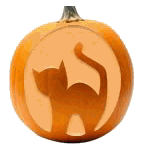 Pumpkin Carving Patterns - Simple and more advanced patterns

CDN Celebrations | New Years | Valentine's Day | St. Patrick's Day | Easter | Mother's Day | Father's Day | Canada Day | Thanksgiving | Halloween | Remembrance Day | Christmas


 e-mail:
jimandgloria@yahoo.com
e-mail:
jimandgloria@yahoo.com


Thank you for visiting us on the World Wide Web.
Copyright © 2000 -
All rights reserved.
Design by
Φ
Unicorn JIF 2007 2008
All suggestions, Broken Links, Corrections and Recommendations
must be submitted to WebMaster
 Send e-mail to:
WebMaster
jimandgloria@yahoo.com
Send e-mail to:
WebMaster
jimandgloria@yahoo.com
